

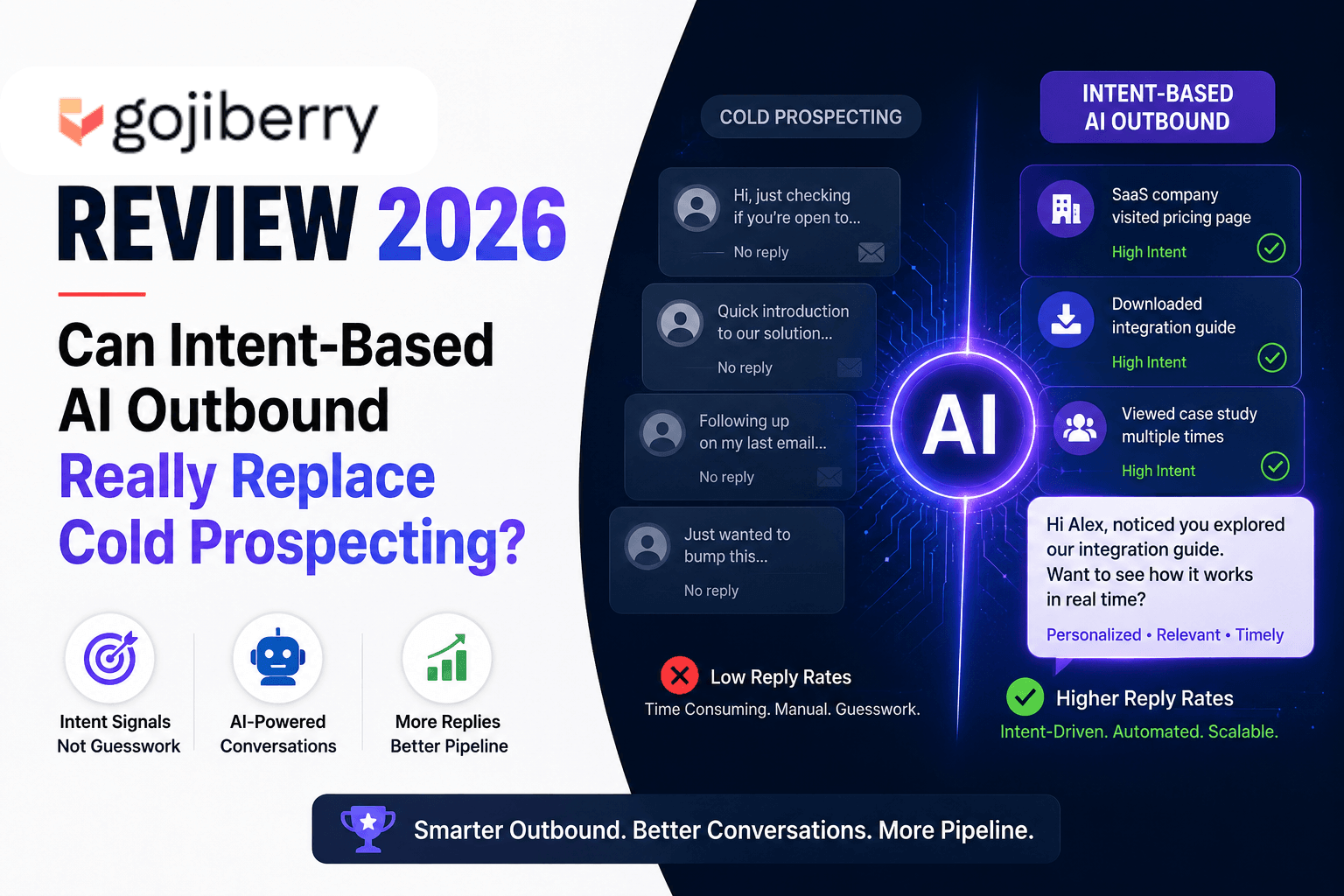
Cold outbound has a reputation problem. Most teams know the playbook too well: pull a list, filter by job title and company size, write an opener that barely clears the bar, and hope a few people reply before the domain, the LinkedIn account, or the sales team’s morale starts to suffer.
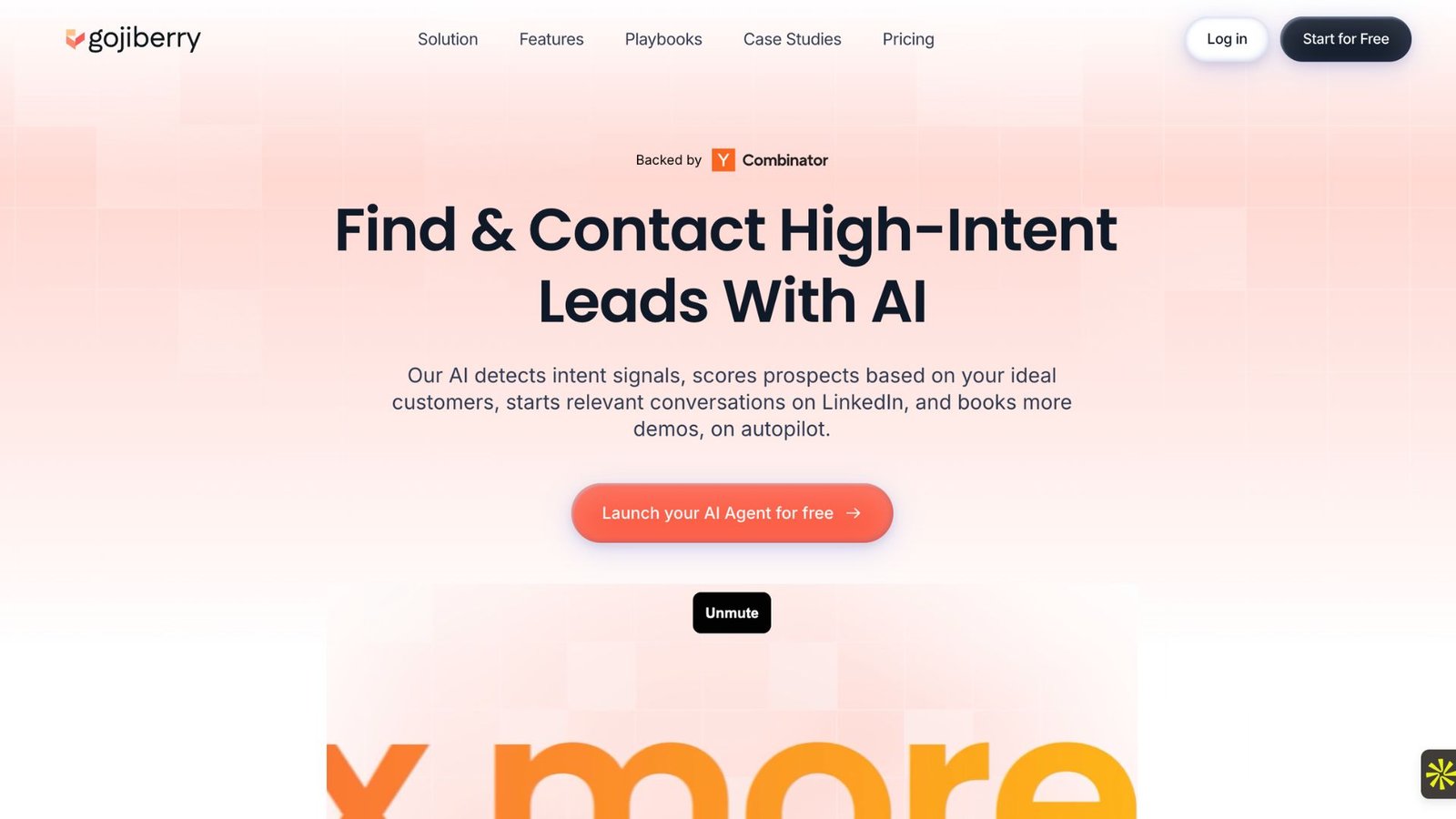
Gojiberry AI bets on a different approach. Instead of helping you send more generic outreach, it tries to find people already showing buying intent — then reaches them with AI-personalized LinkedIn messages. Less spray and pray, more right person at the right moment.
Based on public product research as of May 26, 2026, Gojiberry positions itself as an AI sales assistant — or “GTM Brain” — for warm outbound. The core workflow: detect intent signals, score leads against your ICP, enrich them, write personalized messages, launch campaigns. The homepage says it’s trusted by 1,000+ small sales teams and B2B founders.
What It Actually Does
Gojiberry is not an email sequencer or a LinkedIn helper. It’s built around the idea that lead quality matters more than send volume.
The product monitors public intent signals: competitor engagement, topic and influencer engagement, job changes, funding rounds, new hires, events, LinkedIn group activity. When those signals appear, Gojiberry filters prospects by ICP, enriches them, and generates outreach tied to whatever triggered the alert.
The shift this enables is worth naming. Traditional prospecting asks who matches your ICP. Gojiberry asks who matches your ICP and is showing signs of change, urgency, or attention right now. A VP of Sales at a SaaS company is not automatically worth reaching. A VP of Sales who just commented on a competitor’s post about outbound conversion, hired three SDRs last month, and engaged with a pipeline thread this week is a different kind of lead. That’s what Gojiberry is trying to capture.
(Quick side note: there’s also a Gojiberry product for Shopify surveys at gojiberry.app. Different product entirely. This review covers the B2B outbound platform at gojiberry.ai.)
Features
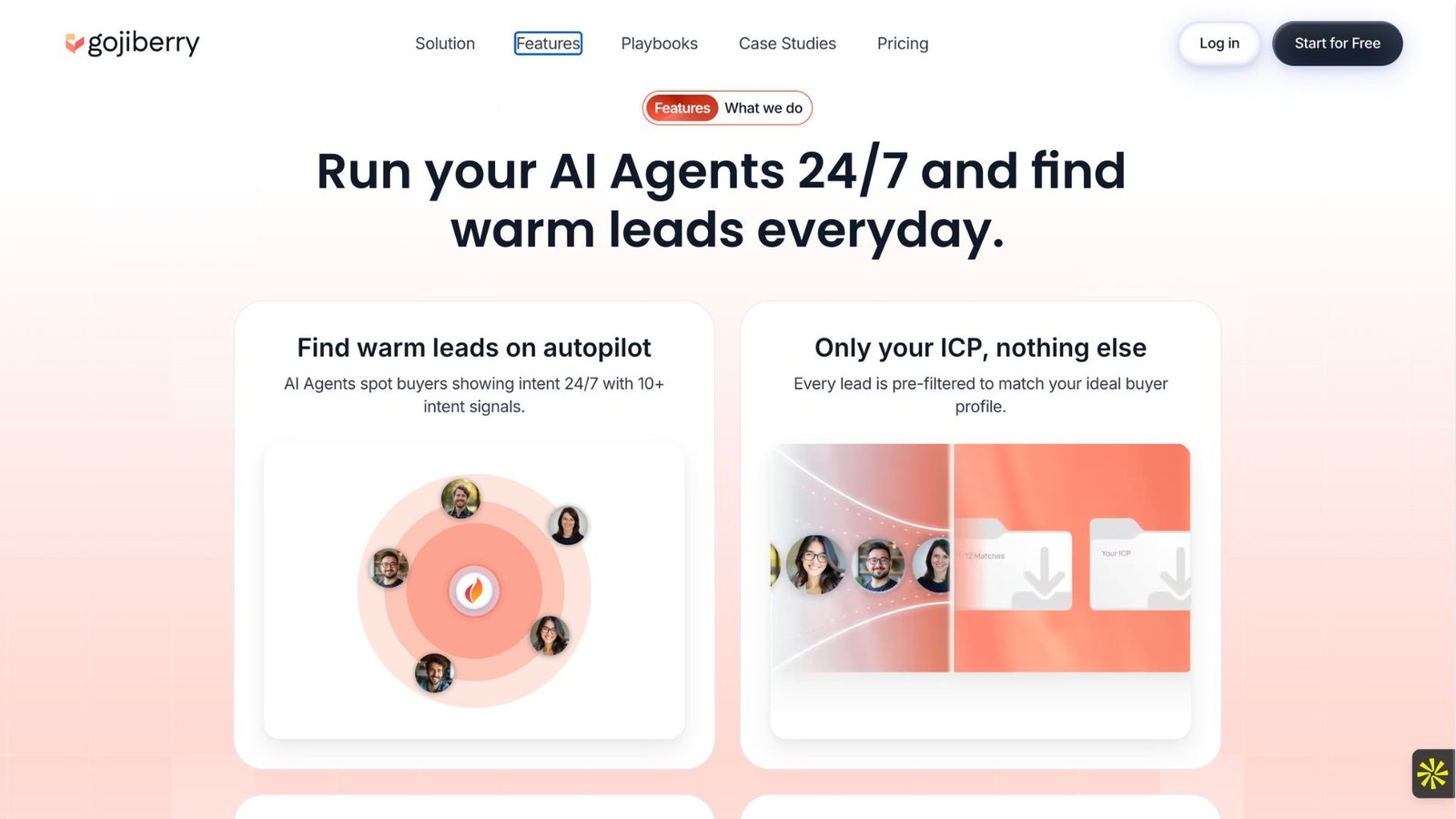
The core feature is intent signal detection. The Pro plan lists 30+ signals — competitor engagement, social activity, job changes, funding events, and more.
Everything detected then runs through ICP filtering and lead scoring. Gojiberry doesn’t surface everyone who liked a keyword. A student reacting to a cybersecurity post is not the same as a CISO engaging with a competitor’s product launch. The filter matters.
Outreach is generated per signal. Someone who just changed jobs gets a different opener from someone who commented on a competitor’s thread. That’s the right idea — the message should connect back to why you’re reaching out in the first place.
There’s also campaign tracking, which is quietly one of the more useful parts. Over time, you can learn which signals actually produce replies and meetings, not just which messages landed. That kind of feedback loop is more valuable than most teams realize early on.
The Pro plan also includes email waterfall enrichment from 15+ data providers, and integrations with HubSpot and Pipedrive. One published case study shows a customer (Mindflow) piping Gojiberry’s intent data directly into their own internal growth automation via API — which suggests the platform works as a data layer, not just a dashboard.
One feature I wasn’t expecting: Gojiberry has a page showing how to run LinkedIn outbound directly from Claude via MCP. The prompts include things like finding SaaS founders hiring SDRs, writing LinkedIn messages tied to the signal, analyzing which job titles replied, and researching companies without jumping between LinkedIn, Apollo, and a CRM. That’s a smart direction — putting the tool inside the workspace where sales operators already think, rather than asking them to learn another interface.
Pricing
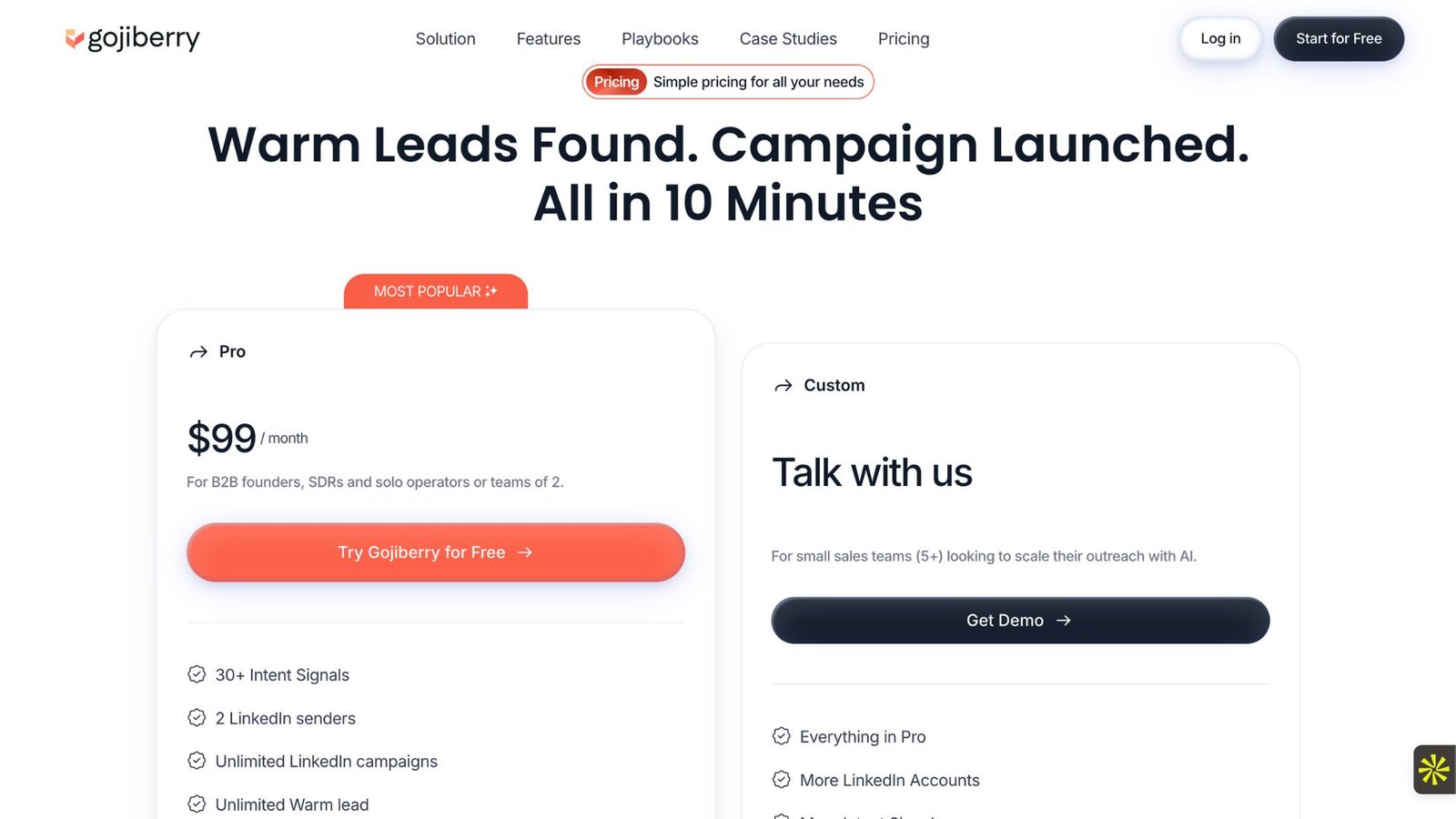
The Pro plan is $99/month. It covers two LinkedIn senders, unlimited campaigns, 30+ intent signals, AI outreach with lead scoring, waterfall enrichment, CRM/API integrations, and support. It’s aimed at B2B founders, SDRs, and small teams.
There’s a Custom plan for teams of five or more. Same core features plus more LinkedIn accounts, more signals, a dedicated customer success manager, and deeper integrations. Pricing requires a conversation.
At $99/month, the math works if you’re selling something with real deal value. A few qualified conversations per month can justify it easily. For low-ACV products, you’d want to be more careful about the numbers before committing.
Case Studies
Gojiberry publishes two case studies worth reading, with the usual caveat that vendor-selected evidence isn’t the same as independent proof.
Wispra reportedly moved from static ICP lists to targeting people already discussing AI search and GEO. According to the case study, they reached around 30 demos per week, with about 60% sourced from Gojiberry and roughly half of revenue influenced by signal-based outreach.
Mindflow, which sells AI automation to enterprise cybersecurity teams, reportedly hit a 31-35% reply rate, with 21% of replies converting to MQLs. The workflow involved detecting signals daily, filtering by ICP, then generating sequences tailored to each signal type.
These numbers are impressive. They’re also best-case. Case studies don’t tell you about average user outcomes, setup effort, or what happens in weaker categories with less urgent offers. The use cases are believable — they align with how good outbound actually works — but I’d treat them as directional, not representative.
Reviews and Reputation
Gojiberry’s Trustpilot profile shows a 3.9 score from 10 reviews: 80% five-star, 20% one-star. Some entries were flagged and included placeholder-looking Lorem ipsum text, which makes the review profile feel noisy. Ten reviews is too small a sample to draw firm conclusions from.
On Y Combinator, Gojiberry is listed as a 2025 company from batch P26, team of seven, based in San Francisco, described as a “GTM Brain for small sales teams.” That YC presence adds credibility, though it doesn’t remove the need to ask hard questions — especially given that the product operates in the sensitive territory of LinkedIn automation and data enrichment.
What It Does Well
The core idea is good: outbound should start with intent, not lists. Most sales tools still optimize for database size. Gojiberry’s position is that timing beats volume, and finding live market moments — the person commenting on a competitor post, the company hiring into a pain point — is more valuable than sending the thousandth cold sequence.
For small teams, there’s a real operational benefit too. Assembling Clay, Apollo, Sales Navigator, a scraper, an enrichment waterfall, a sequencer, a CRM sync, and a reporting layer before sending a single message is exhausting. Gojiberry compresses most of that into one workflow.
The feedback loop is underrated. Over time, knowing that competitor engagement signals convert better than funding announcements in your category, or that job changes work in martech but group activity works in cybersecurity — that kind of signal intelligence compounds.
Where It May Fall Short
Intent signals are not confirmed purchase intent. Someone liking a competitor’s LinkedIn post might be curious, or might be killing five minutes. Someone who changed jobs might be too buried to think about new tools for months. Gojiberry can improve your prioritization, but it can’t tell you about budget, authority, internal politics, or timing.
The Pro plan is heavily LinkedIn-focused. Two LinkedIn senders, unlimited LinkedIn campaigns. If your market doesn’t live on LinkedIn, or if you need a real multichannel motion, this probably isn’t enough on its own.
The compliance question is real and shouldn’t be glossed over. LinkedIn’s own documentation says it doesn’t permit third-party software, bots, or browser extensions that automate activity on its platform. Gojiberry’s footer says it’s not associated with or endorsed by LinkedIn — standard disclaimer, but buyers should ask specific questions anyway. How does the tool connect to LinkedIn? Does it use official APIs? What actions are automated? What happens if an account gets restricted?
AI-written outreach can also get generic fast if the input signals are shallow. “Saw you liked a post about AI” is not a strong opener. The message has to connect the signal to a real business problem and a credible reason to talk. Whether Gojiberry does that well depends heavily on your ICP, your offer, and how carefully you set things up.
Who It’s For
Gojiberry makes the most sense for B2B SaaS companies, agencies, consultants, cybersecurity vendors, AI infrastructure companies, and founder-led teams selling higher-value offers where LinkedIn is already part of the sales motion.
It’s especially useful if you’ve tried cold databases and found them too noisy — if you already know your best buyers are active on LinkedIn, engaging with competitors or category content, and reacting to relevant news. Gojiberry gives you a system for acting on that faster than you could manually.
It’s probably not the right fit for very early teams that haven’t nailed ICP yet. The tool can amplify a working sales motion; it can’t create one. It’s also not ideal for companies with strict compliance requirements around data sourcing and platform automation unless Gojiberry can answer those questions clearly in procurement.
Alternatives
Apollo is stronger as a contact database. Clay is stronger as a flexible data workflow builder. Smartlead and Instantly are better for email infrastructure. HeyReach and La Growth Machine are closer competitors for LinkedIn or multichannel outreach. Common Room handles community and product-led signals better. UserGems is stronger for job-change tracking and relationship pipeline.
Gojiberry’s difference is packaging. It’s not trying to be the biggest database or the most customizable workflow engine. It’s trying to get small teams from buying signal to personalized outreach faster than the alternatives.
Worth Testing?
Gojiberry is built around something true: better timing beats bigger lists. Its best use case isn’t “send more messages” — it’s “notice the right moment before your competitors do.”
At $99/month, with intent detection, ICP filtering, AI-personalized LinkedIn outreach, enrichment, and CRM integrations baked in, the entry point is reasonable for what it offers. The YC background and published case studies give it more credibility than a random AI directory listing. The review footprint is still thin, and the LinkedIn compliance questions deserve real answers before you commit.
The smartest way to try it: run a narrow campaign, with a clearly defined ICP, conservative send limits, and careful measurement. If it works in that contained test, scale from there.
Gojiberry won’t fix your positioning or replace sales judgment. But as an intent-first prospecting layer for small teams that already sell through LinkedIn, it has a thesis worth taking seriously.
Leave a Reply